
Bow Theory is a individual magazine spread I have created as a personal project highlighting work by Sandy Liang and the community she has built. I wanted to conceptualize her nostalgic and child-like whimsy into illustration and design to convey her voice as she has built her brand over the years.
TYPE
TYPE
TYPE
Publication Design, Illustration, Digital
Individual
InDesign, Figma, Procreate
3 Weeks
TEAM
TOOLS
DURATION


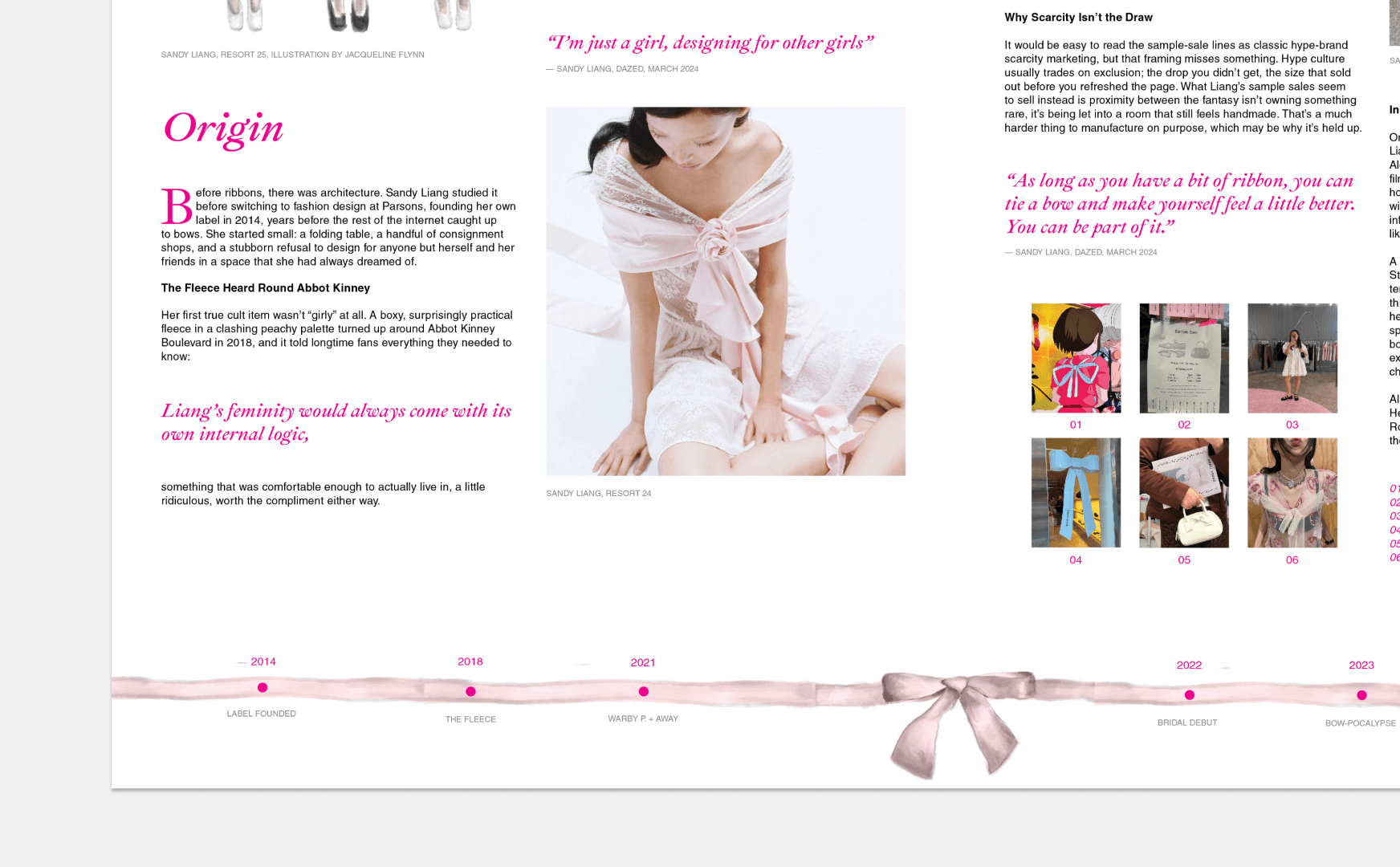


FINAL SPREAD
DESIGN DECISIONS & PROCESS
ILLUSTRATION ASSETS
DIGITAL




I took a lot of inspiration from flipping through my Sabukaru 2nd Edition magazine that highlights a variety of designers and brands within their own unique identities along with their stories. A large challenge I wanted to tackle was condensing a lot of text and engaging imagery into a print design spread. In early drafts, it was a bit crowded with the orientation of images with text chunks, but I solved this by allowing the images to their own roles: to serve beside the text to add as visual pauses.
I illustrated every asset by hand in my style because I felt the soft texture gave each piece a feeling of personal keepsake rather than a traditional product catalog. I focused on small and familiar details Sandy Liang is known for (Mary Janes, a pleated skirt, the jumbo scrunchie, and a flower clip) and drew them as if they were belongings laid out on a bedroom floor, which was a nod back to the tie to girlhood-driven design.
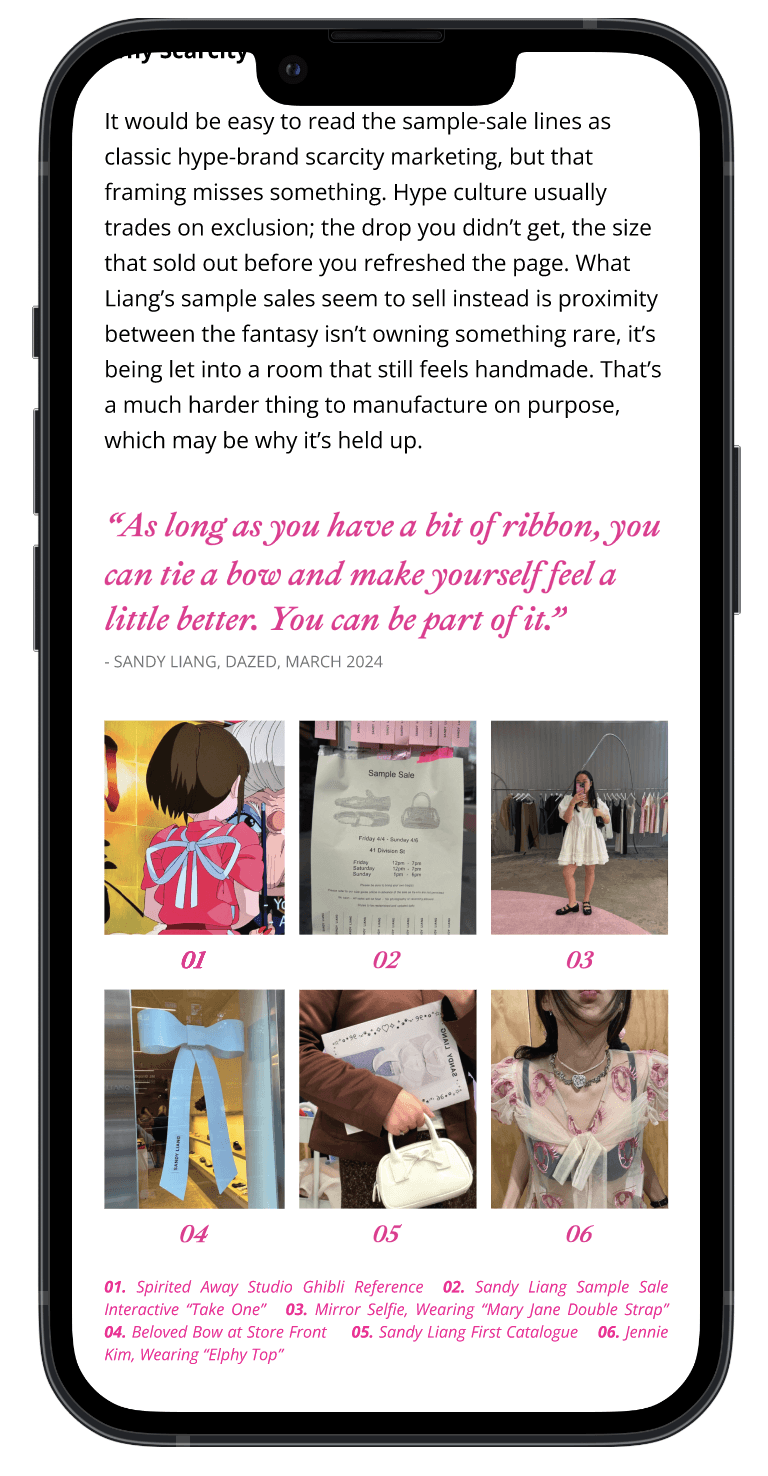
For desktop and mobile, I translated the spread into a single scrolling column so the story reads as one continuous thread. The illustrations and photos sit between text sections as visual pauses, and the pink pull quotes break up longer passages on smaller screens. On screen, the scroll itself becomes the timeline, moving through Sandy's story in order, while the ribbon and bow stay as section dividers so the digital version still feels tied to the print piece.


DIGITAL
Each card features a single object with one shared line, "You can be a part of it," drawn from the article's idea that anyone with a bit of ribbon can join in, while the back carries the title and the same ribbon and bow that tie the print and digital versions together. Beyond being a keepsake, the cards work as a small marketing touchpoint, something that could be tucked into an order or handed out at a sample sale, giving readers a reason to collect all five and carry the story with them.
